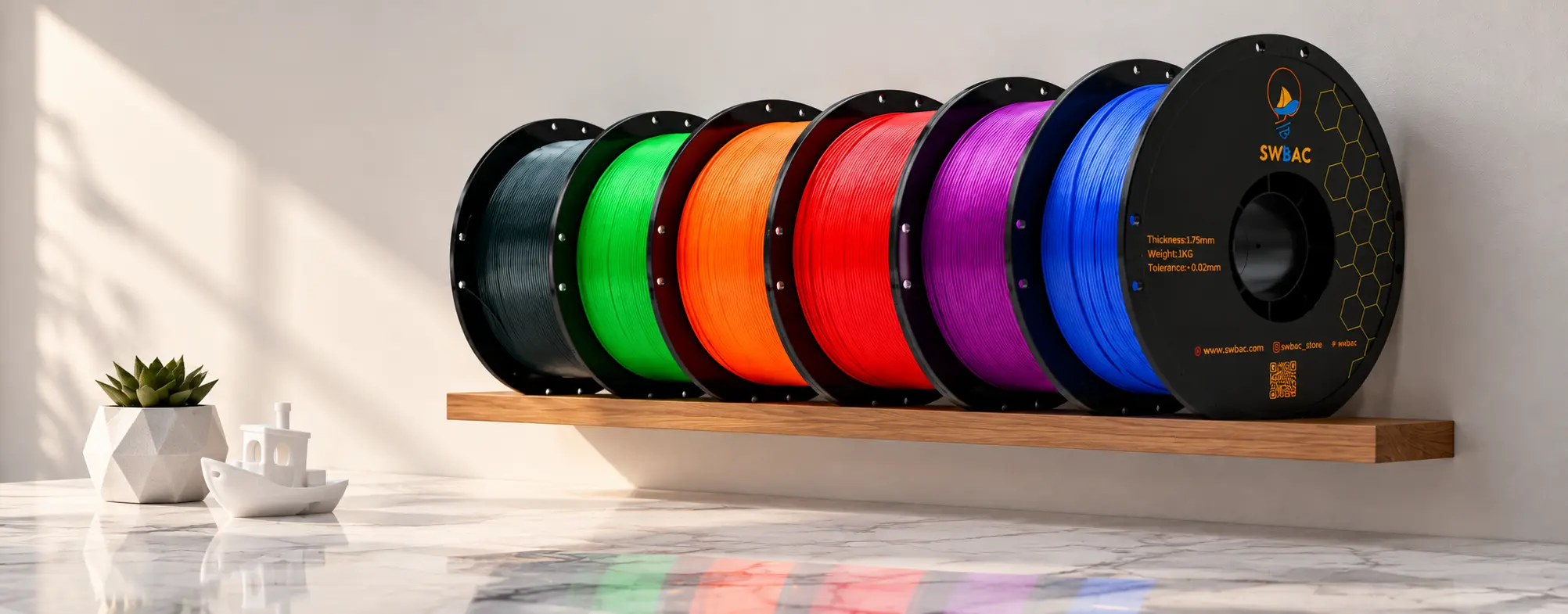
SWBAC PLA Pro Calibration Guide: Best Temperature, Flow Rate & Print Settings (2026)

Written By
marketing
SWBAC PLA Pro – Calibration and Performance Evaluation
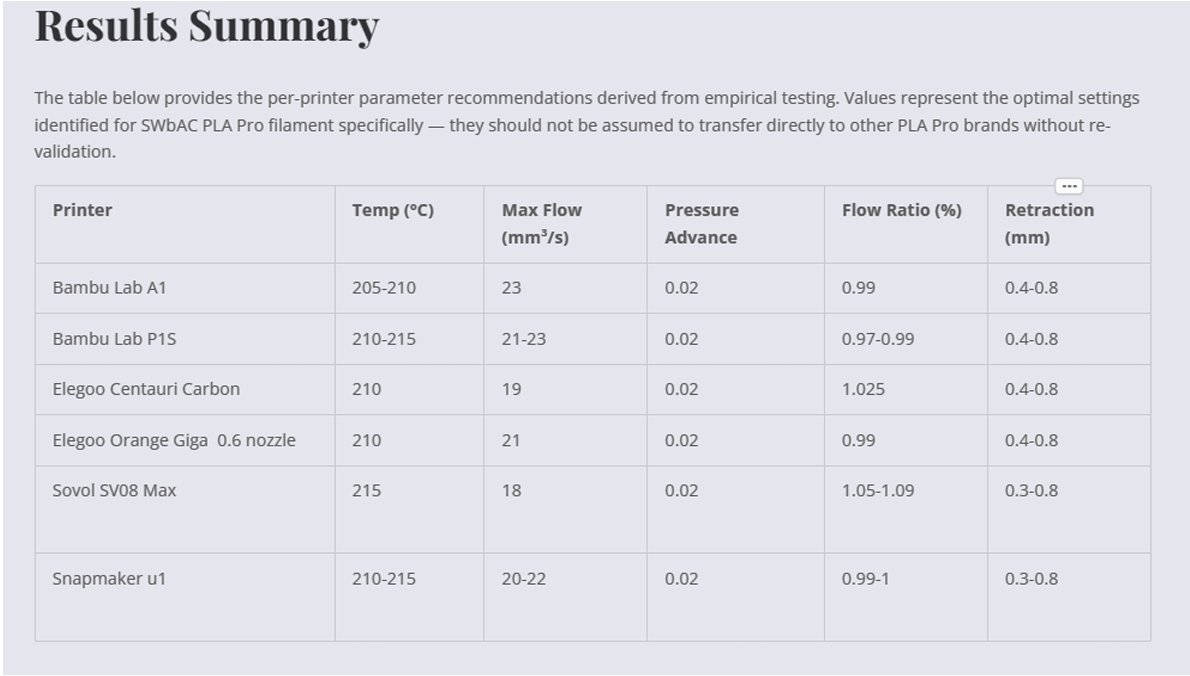
SWBAC PLA Pro was evaluated on various printers to determine its optimal printing parameters and overall print performance.
Test Conditions
-
Printers: Bambu Lab A1, Bambu Lab P1S, Sovol SV08 MAX, Elegoo Orange Giga, Snapmaker U1, Elegoo Centauri Carbon
-
Material: SWBAC PLA Pro
-
Nozzle Diameter: 0.4 mm (Elegoo Orange Giga: 0.6 mm nozzle)
-
Slicer: Elegoo Slicer
Temperature Calibration
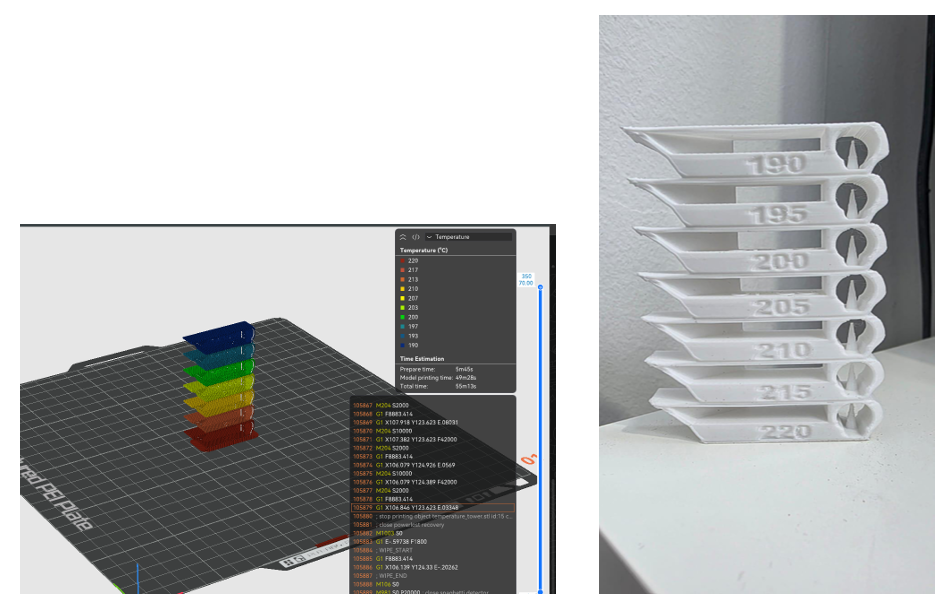
A temperature tower was printed to identify the optimal nozzle temperature range. The evaluation focused on surface finish, layer adhesion, overhang quality, and stringing performance.
The test was conducted over a temperature range of 190°C to 220°C, with 5°C intervals.

Maximum Volumetric Flow Rate
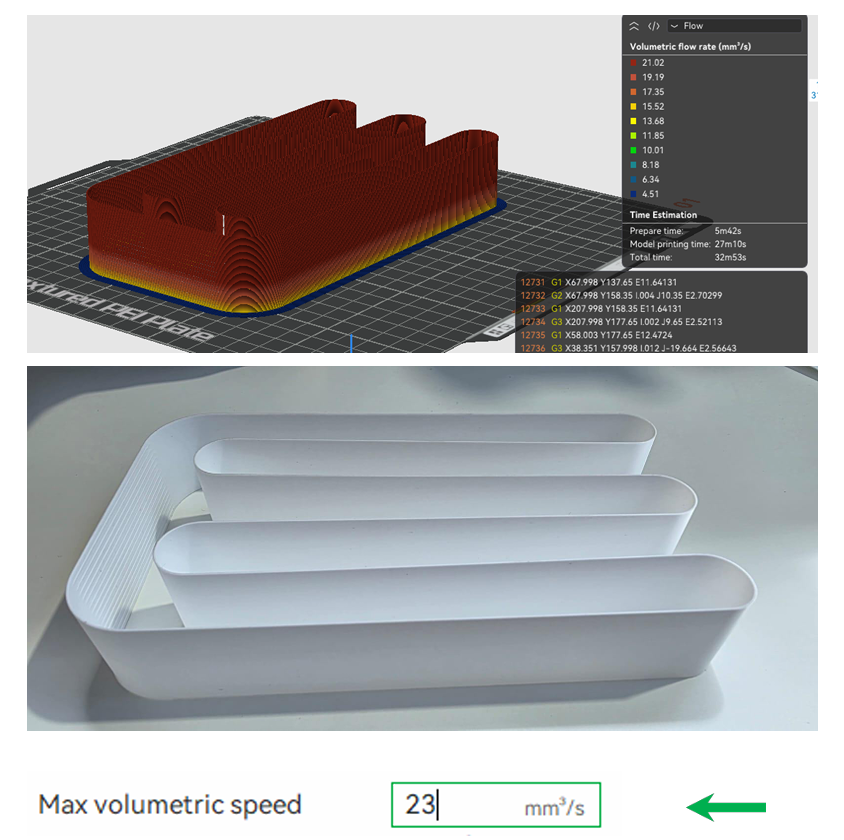
Flow rate testing was conducted to determine the highest reliable extrusion rate while maintaining print quality. The results provide guidance for high-speed printing applications. The range was tested from 5–30 mm³/s to determine the maximum volumetric flow rate that can be achieved without compromising the overall print quality.
Flow Ratio Calibration
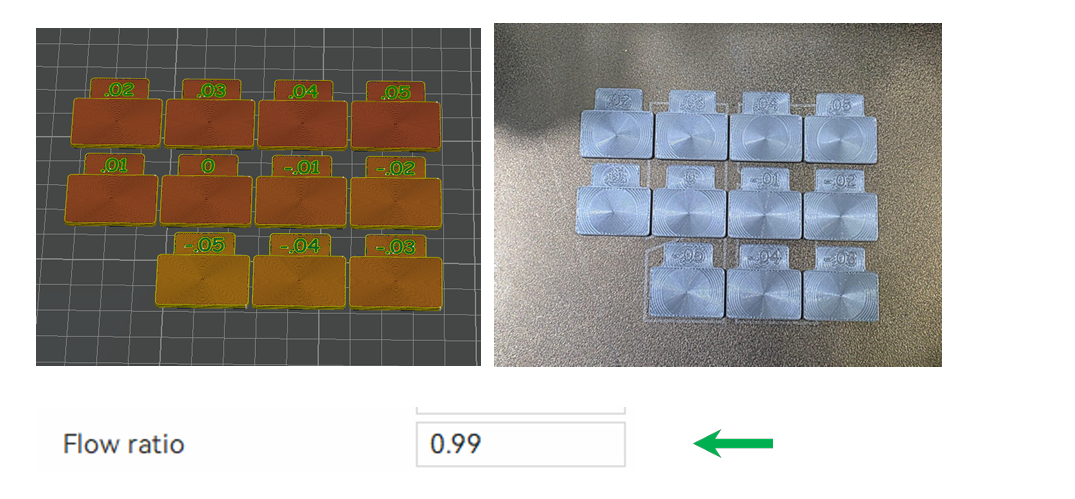
Flow ratio calibration was performed to optimize dimensional accuracy and surface consistency. The calibrated value produced improved wall quality and more accurate part dimensions. The filament was selected using a generic profile with the default flow ratio and tested.
Pressure Advance Calibration
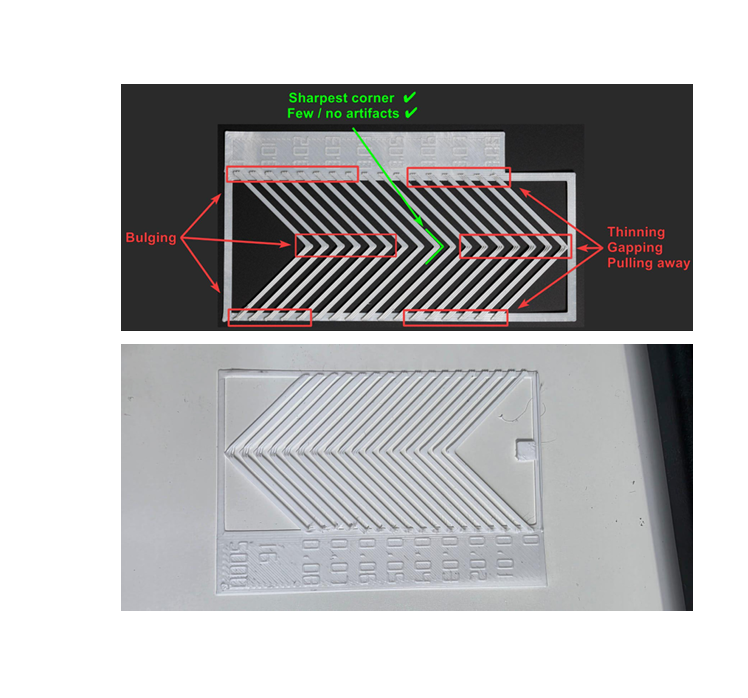
Pressure Advance calibration was conducted to evaluate extrusion consistency during changes in print speed and direction. SWBAC PLA Pro produced clean corners and uniform extrusion using the default calibration values, indicating stable material flow characteristics.
Result: No adjustment from the default calibration was required in most cases.
What affects Pressure Advance?
-
Filament stiffness
-
Melt flow characteristics
-
Printing speed
-
Nozzle size
-
Extrusion temperature
When should it be changed?
-
Excessive corner bulging
-
Blobs at line starts or ends
-
Inconsistent extrusion during acceleration
Retraction Performance
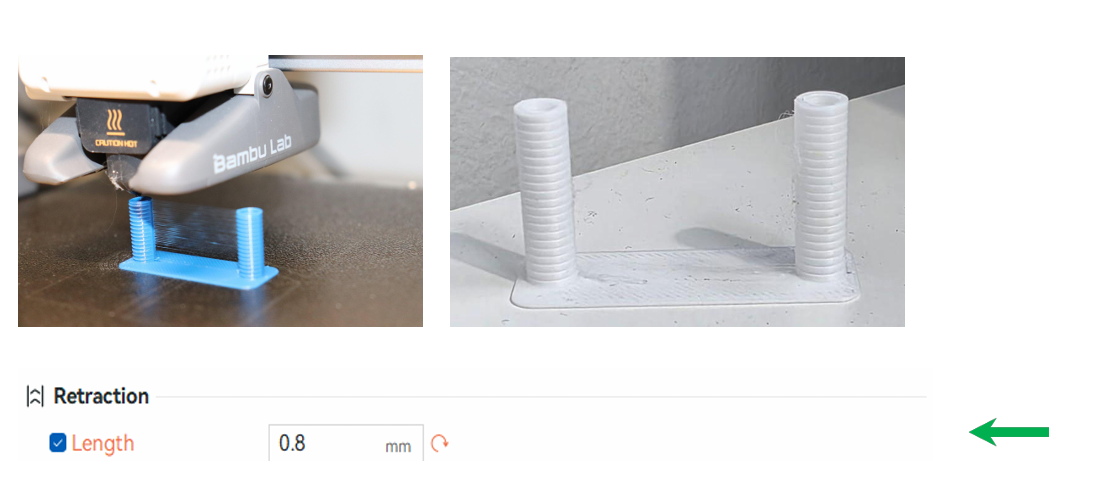
Retraction testing was performed to assess stringing behavior during travel moves. SWBAC PLA Pro demonstrated minimal stringing and clean travel transitions using the default retraction settings in most cases.
Result: Default retraction settings were maintained.
What affects Retraction?
-
Filament material
-
Nozzle temperature
-
Travel speed
-
Moisture content
-
Extruder design
When should it be changed?
-
Excessive stringing between parts
-
Oozing during travel moves
-
Blobs at travel endpoints
Print Quality
The filament exhibited:
-
Smooth surface finish
-
Consistent extrusion
-
Strong layer adhesion
-
Minimal stringing
-
Reliable high-speed performance
Conclusion
SWBAC PLA Pro demonstrated excellent printability across various printers. These results indicate reliable performance for both high-quality and high-speed printing applications.
Tags
Categories
3D Printing Kuwait
(1)
Creality Ender 3 Upgrades & Modifications
(1)
3D Printer Upgrades & Calibration
(1)
3D Printing Guides & Tutorials
(1)
Creality CR-10 S5 Upgrades: SKR Mini E3 V3 & Micro Probe Guide
(1)
3D Printer Troubleshooting
(1)
Filament Guides
(1)
Resin 3D Printing
(1)
3D Printing Using TPU Filament
(1)
Robotics for kids
(1)
Recent Posts
Do Kids Need to Learn Robotics?
2026-10-06


Archives
Oct 2026
(1)
Sep 2026
(1)
Jul 2026
(2)
Jun 2026
(6)
More From marketing
Do Kids Need to Learn Robotics?
2026-10-06